


Quick answer
Great product with proven performance in the XP line. Looking for best bang for your buck? Well you have found it.
Who this is for
Best for
Best for serious hunters and landowners who want a premium handheld thermal monocular with laser rangefinding for scanning, locating heat fast, and judging distance before they ever shoulder a rifle.
Not ideal for
Not ideal for buyers who want a dedicated rifle-mounted thermal scope, need two-eye viewing comfort for long sits, or only want the cheapest way to try thermal.
Quick specifications
- Category
- Thermal Handheld
- Sensor Resolution
- 640x480
- Magnification
- 2.5-10x
- Objective Lens
- 50
- Detection Range
- 1900
- Rangefinder
- Yes
Why buy from Thermal Bros
Full product description
The Pulsar Telos LRF XP50 Puts a Rangefinder in the Scanner
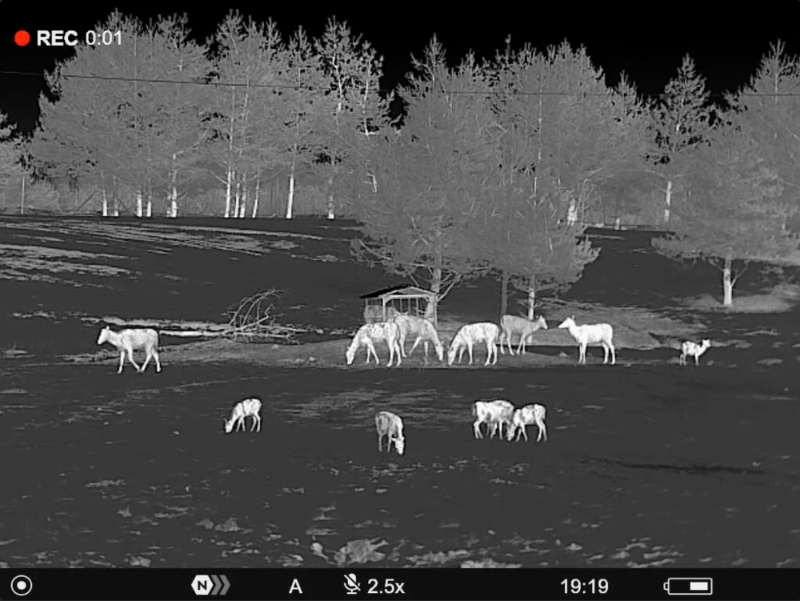
The Pulsar Telos LRF XP50 is a handheld thermal monocular with a laser rangefinder built into the housing. Everything optical about it matches the standard Telos XP50: the same 640 sensor, the same 50mm lens, the same image in the same conditions.
What changes is the workflow. Find the heat, press the button, read the distance, all without lowering the unit or reaching for anything else.
Ranging Happens Without Breaking Your Scan
The reason to buy ranging inside the scanner is time. A separate rangefinder means lowering the thermal, finding the same animal again through a different device in the dark, and hoping it has not moved. On a coyote that is committing or a hog group that is drifting, that swap costs you the shot.
With the rangefinder in the unit, the animal never leaves your view. You are looking at it, you get the number, and you make the call. Single ranging gives you one clean number on a stationary animal. Continuous scan mode updates the distance while you track something that is moving, which is what you want when hogs are crossing a field and the range changes every few seconds.
Distance Is Most Useful When Someone Else Is on the Rifle
The clearest case for this unit is two people hunting together. The caller carries the scanner, finds the animal, and calls out the distance, while the shooter stays behind the rifle and never breaks position. That division of labor is faster and quieter than both hunters working the same optic.
Solo hunters get a version of the same thing. Range from the handheld before you shoulder the rifle, and the dial or holdover decision is made before you are behind glass.
What the Laser Reach Number Means
Rangefinder reach and hunting distance are two different things. The laser can return a number on a reflective surface far beyond the distance at which the thermal image will tell you what animal you are looking at, and identification is the distance that governs an ethical shot.
Read the laser figure as a measuring tool, not a range recommendation. On live animals in real conditions, expect shorter returns than the rated maximum, especially in fog, rain, and heavy humidity.
Recording, Streaming, and Battery on the LRF XP50
Video and photos record to 64GB of built-in storage, and footage moves to your phone over Wi-Fi through the Stream Vision 2 app. Ranged distances appear in the recorded footage, which makes the clips useful later for judging what your ground actually presents.
Power comes from a removable battery pack rated for around 8 hours, charged with the same USB-C cable that charges your phone. Ranging draws power, so a spare pack matters slightly more on this model than on the non-ranging version.
The LRF XP50 Is Waterproof and Built to Be Upgraded
This is fully waterproof equipment, rated to survive a drop into shallow water rather than just shrugging off rain, and it runs through cold snaps and summer heat alike.
The Telos platform accepts hardware upgrades through Pulsar's upgrade service, including a higher tier sensor or a different lens, so the ranging module you paid for carries forward if your optical needs change.
Who Should Skip the Ranging Version
If you hunt the same feeders, stands, and food plots every night, you already know your distances, and the standard XP50 puts that money back in your pocket. If you carry a handheld rangefinder you trust and hunt alone at moderate distances, the second ranging tool is redundant.
Telos LRF XP50 FAQ
How far does the rangefinder on the Telos LRF XP50 reach?
The rated maximum is in the specifications on this page. That figure describes the laser returning a reading off a surface under good conditions, not a distance at which you can identify or ethically shoot an animal.
Does the LRF XP50 range moving animals?
Yes. Continuous scan mode updates the distance while you track, which is the mode to use on moving hogs or a coyote working toward a call. Single ranging is the cleaner choice on a stationary animal.
Is the image different from the standard XP50?
No. Same sensor, same lens, same magnification range. The rangefinder is the only functional difference between the two.
Does ranging shorten battery life?
Ranging draws additional power, so heavy use shortens a night's runtime compared to scanning alone. The battery pack is removable and swaps in seconds, so a spare covers it.
Do ranged distances show up in recordings?
Yes. The distance reading appears on the display and is captured in recorded video and photos.
Stream Vision 2
Wi-Fi integration with iOS and Android devices


Technical Specifications
-
Sensor Resolution (px)
640x480 -
Display Resolution (px)
1024x768 -
NETD Rating
18 -
Detection Range
1900 -
Refresh Rate (Hz)
50 -
Field of View
10.5
-
Weight
1.5 lb -
Dimensions
9.3 in 2.8 in 3.5 in -
HZ - refresh rate
50 -
Category
Thermal Handheld -
Handhelds
Yes -
Thermal Sensor Resolution
640x480 -
Display Resolution
1024x768 -
Pixel Pitch
17 -
NETD Rating
18 -
Detection Range
1900 -
Range Finder
Yes -
Clip-On
No -
Magnification Base
2.5 -
Magnification Max
10 -
Objective Lens
50 -
Field of View
10.5