
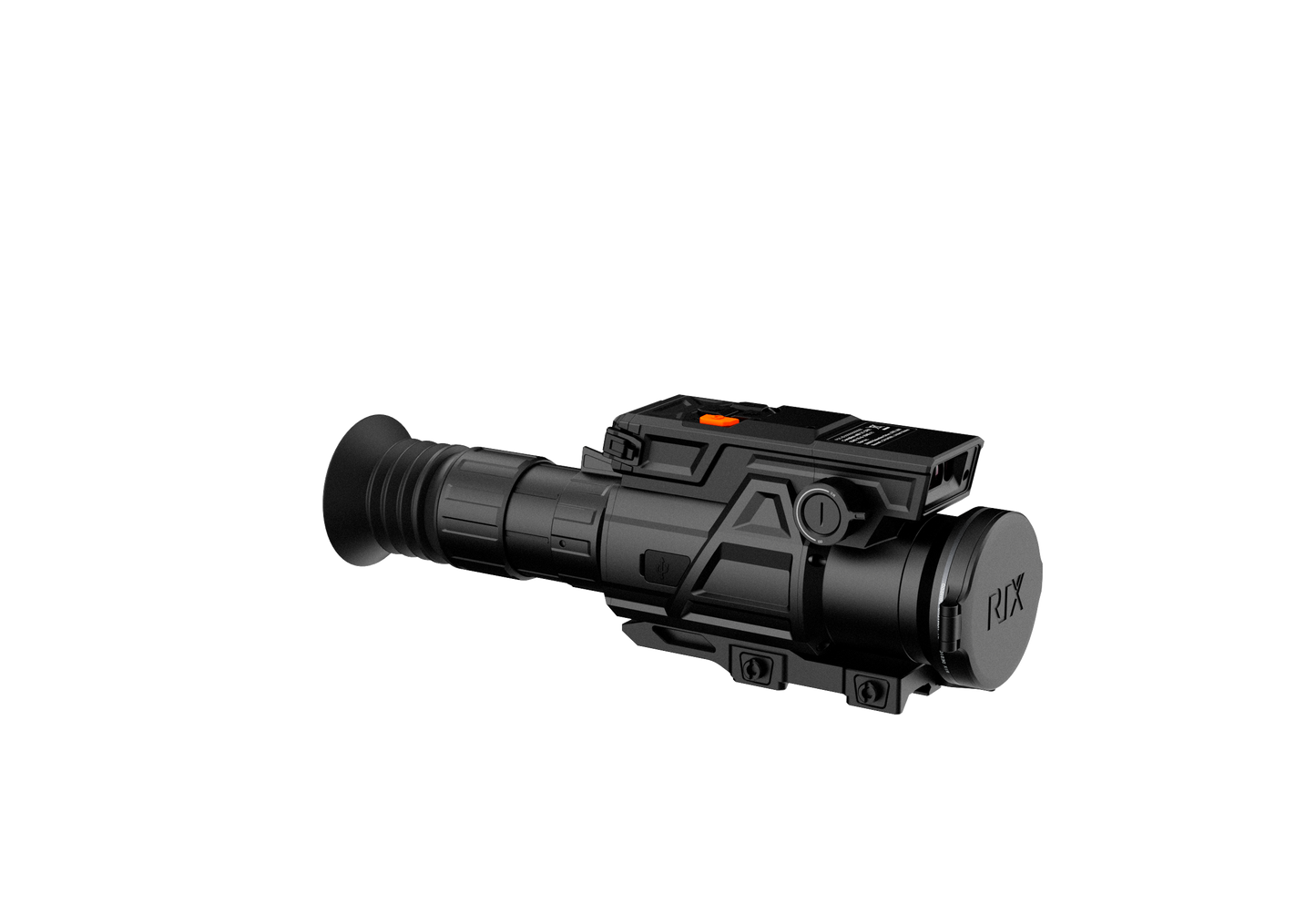
RIX DBH D6 640 60mm LRF Thermal Rifle Scope
Quick answer
The RIX DBH D6 is a 640×512 thermal rifle scope with a 60mm F1.0 objective, 3× base magnification, a 2560×2560 display and a built-in 1,312-yard laser rangefinder. Its 60 Hz sensor and onboard ballistic calculator suit hunters who want a...


Who this is for
Best for
Coyote and hog hunters wanting a 60mm 640 thermal sight with an integrated rangefinder.
Not ideal for
Hunters who prioritize the compact size and lower weight of a STORM or need a handheld scanner.
Why buy from Thermal Bros
Thermal Bros helps you compare the exact model, starting view, image detail and accessory fit for your intended use. Tell us your terrain, current equipment and budget so we can help you choose the right complete setup.
Full product description
The RIX DBH D6 is a 640×512 thermal rifle scope with a 60mm F1.0 objective, 3× base magnification, a 2560×2560 display and a built-in 1,312-yard laser rangefinder. Its 60 Hz sensor and onboard ballistic calculator suit hunters who want a dedicated thermal sight with integrated ranging.
A 60mm lens with a 640×512 thermal detector
The D6 pairs a 60mm objective with a 640×512, 12-micron detector. Its 3× base view provides useful starting image scale for field observation, and the 1–6× digital zoom multiplier extends displayed magnification to 18×. Increasing digital zoom enlarges the image already captured by the sensor.
A 2560×2560 display, 60 Hz refresh rate and published sensitivity below 20 mK address different parts of the viewing experience. The display presents the image, refresh rate describes how often the detector updates, and NETD describes its sensitivity to small temperature differences. Consider the whole system instead of treating any one number as a guarantee.
Who this model is for
Coyote and hog hunters wanting a 60mm 640 thermal sight with an integrated rangefinder.
Hunters who prioritize the compact size and lower weight of a STORM or need a handheld scanner. Compare the alternatives below before deciding.
Match the starting view to your hunting ground
For coyote calling, hog hunting and observation across agricultural ground, start with where animals usually appear. A lower starting magnification can make it easier to keep a moving subject inside the frame. A larger starting image can help when attention is focused farther across a field. Field of view and native detector resolution make that tradeoff clearer than the largest zoom number.
The right comparison includes your rifle balance, normal observation position and whether you already carry a separate scanner. A rifle-mounted thermal sight and a handheld thermal monocular serve different roles. Build around the job you need the optic to do before spending more on a specification that may not change your experience.
What digital zoom changes
Base magnification is the starting view. The digital zoom setting multiplies that view by electronically enlarging the captured image. A larger displayed subject can help with observation, but the detector still contains the same number of pixels. Maximum magnification is therefore a poor substitute for comparing native image detail.
The specifications below distinguish the thermal detector from the viewing display. A higher-resolution display can present the image differently, but it does not increase the detector’s native resolution. Check both specifications when comparing models or generations.
Laser ranging, ballistics and realistic image expectations
The integrated rangefinder measures distance to a suitable target. The onboard ballistic calculator uses range and the rifle profile you enter to provide a ballistic reference. Its usefulness depends on accurate inputs and calibration of the complete rifle and optic setup.
Maximum laser ranging distance, thermal detection distance and species identification describe different capabilities. A published maximum is not a guaranteed distance for identifying an animal. Weather, humidity, vegetation, target size and thermal contrast all affect the image. Use the image and conditions in front of you instead of treating an advertised range as a promise.
Power and setup before the first trip
Check the battery type, mount interface and manufacturer-rated runtime in the specification table. Battery ratings are measured under stated conditions and can change with temperature, recording, Wi-Fi use and other settings. Carrying the correct charged spare is usually more useful than planning around an ideal runtime number.
Set the eyepiece focus, confirm objective focus and review the controls before relying on the optic outside. Use the exact model’s manual for firmware, ranging and battery instructions. A shared series name does not establish that two generations use identical menus or accessories.
RIX DBH D6 specifications
| Specification | Details |
|---|---|
| Thermal sensor | 640×512 |
| Pixel pitch | 12μm |
| NETD | <20 mK |
| Refresh rate | 60 Hz |
| Objective lens | 60mm, F1.0 |
| Base magnification | 3× |
| Digital zoom multiplier | 1~6× |
| Field of view at base setting | 7.3°×5.8° |
| Eye relief | 60mm |
| Display type | OLED |
| Display resolution | 2560×2560 |
| Maximum laser ranging distance | 1312yd |
| Ballistic calculation | Yes |
| Recording storage | 64GB |
| Weather protection | IP67 |
| Manufacturer-listed weight | 2.9 lb |
| Battery type | 18650 |
| Manufacturer-rated runtime at 72°F | 8 h |
Compare related models
RIX STORM S6R V2: Compare the STORM S6R V2 for a smaller 35mm 640 platform with a lower starting magnification.
RIX DBH D12: Compare the D12 for a larger 1280×1024 detector and 75mm objective.
Frequently asked questions
What is the RIX DBH D6?
The RIX DBH D6 is a 640×512 thermal rifle scope with a 60mm F1.0 objective, 3× base magnification, a 2560×2560 display and a built-in 1,312-yard laser rangefinder. Its 60 Hz sensor and onboard ballistic calculator suit hunters who want a dedicated thermal sight with integrated ranging.
How does the DBH D6 compare with the STORM S6R V2?
Compare the STORM S6R V2 for a smaller 35mm 640 platform with a lower starting magnification.
Does the DBH D6 have a laser rangefinder?
Yes. RIX lists a maximum ranging distance of 1312 yards. Target reflectivity and conditions affect performance. This number describes laser ranging, not animal identification distance.
Does more zoom add thermal detail?
Digital zoom enlarges the image already captured by the detector. It does not add thermal pixels. Compare the starting view and detector resolution alongside maximum magnification.
Can the DBH D6 guarantee identification at its detection range?
No. Detecting a heat source and identifying an animal are different tasks. Weather, target size, contrast and viewing conditions determine the detail you can use.
Where can I get help choosing the right setup?
Contact Thermal Bros with your usual terrain, observation distances, current equipment and budget. We can help compare the models and identify the accessories needed for your intended use.
Get help from Thermal Bros
Start with your intended use and the equipment you already own. Tell us what you want to see, the ground you cover and the budget for the complete setup. We can help you compare the practical differences and avoid buying accessories that do not fit your chosen model.
Contact Thermal Bros, browse our RIX Optics collection, or visit product manuals and setup and the battery finder. Current pricing and availability are shown with the purchase options above.
Owner resources
Manuals & setup
Manufacturer manual for this model or series. Covers troubleshooting, care and maintenance, power and batteries.
Warranty & support
Email info@thermalbros.com with your exact model and a description of the issue.