

Quick answer
Test
Who this is for
Best for
Best for hunters who want a practical thermal rifle scope for common hog and predator ranges without overbuying premium resolution.
Not ideal for
Not ideal for open-country identification at longer distances or buyers who already know they need cleaner 640-class detail.
Quick specifications
- Category
- Thermal Rifle Scopes
- Sensor Resolution
- 384x288
- Magnification
- 3.5-28x
- Objective Lens
- 35
- Detection Range
- 2700
- Rangefinder
- Yes
Why buy from Thermal Bros
Thermal Bros compares thermal scopes by real field use, not spec flex. We will tell you when this optic makes sense, when a different lens or sensor tier would serve you better, and what you are actually paying for.
Full product description
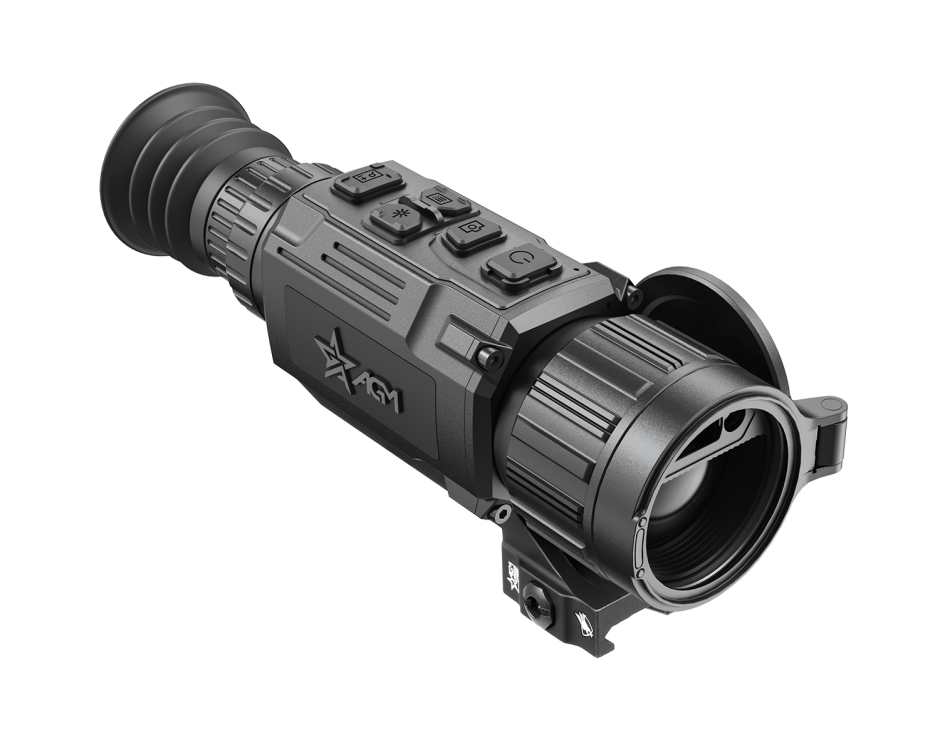
The AGM Rattler V3 LRF 35-384 brings the full V3 LRF platform in-lens laser rangefinding, an onboard ballistic calculator, shutterless NUC, and Image Boost 2.0 to a 384-sensor scope at the lineup's mid-tier price. It pairs a 384—288 12-micron thermal sensor with a 35mm F/1.0 germanium lens, a 1,000-meter integrated rangefinder, and a 2,710-yard detection range, making it the Rattler V3 LRF model for predator hunters who want every platform feature without stepping up to a 640-sensor price.
The Rattler line has come a long way. What launched five years ago as an entry-level thermal competitor has, through the V2 generation and now V3, become one of the more technically advanced thermal platforms available. The 35-384 is proof that the platform's intelligence the ranging, the ballistics, the image processing isn't reserved for the flagship. Every V3 LRF feature is here; what changes across the lineup is sensor resolution and lens size.
How the AGM Rattler V3 LRF Lineup Works
AGM's model naming tells you exactly what you're getting. Every Rattler V3 LRF model is named by two numbers: objective lens size, then sensor resolution.
- AGM Rattler V3 LRF 50-640 50mm lens, 640 sensor. The long-range flagship. $4,895.
- AGM Rattler V3 LRF 35-640 35mm lens, 640 sensor. The compact 640. $4,295.
- AGM Rattler V3 LRF 35-384 35mm lens, 384 sensor. The mid-tier full V3 platform, 384 sensor. $2,995.
- AGM Rattler V3 25-384 25mm lens, 384 sensor. The compact entry point. $2,395.
All four share the same V3 platform in-lens LRF, the high-resolution display, shutterless NUC, the customizable display, and Image Boost 2.0. What changes is sensor resolution (640 vs. 384) and objective lens size, which drives magnification and detection range.
What Makes the 35-384 Specific
The 35-384 pairs the 384 sensor with a 35mm lens the same objective as the 640-sensor 35-640, at a meaningfully lower price.
The 384—288 12-micron sensor is AGM's standard-resolution thermal core. It carries fewer pixels than the 640 used in the 50-640 and 35-640, which means a shorter practical identification range and less fine detail at high magnification. What it does not mean is a compromised scope paired with the V3 platform's sub-15 mK sensitivity, 1920—1080 OLED display, and Image Boost 2.0 processing, the 35-384 produces a clean, usable thermal image well within the distances most predator hunters actually shoot.
The 35mm F/1.0 germanium lens gives the 35-384 a 3.5x base magnification, expandable to 28x through digital zoom, and a 2,710-yard detection range. That 3.5x base suits open-terrain predator hunting where you're identifying targets across distance.
The honest framing: the 35-384 is the value pick of the lineup. It costs $1,300 less than the 35-640 same lens, same platform, same everything except the sensor steps from 640 down to 384. If your hunting happens at distances a 384 sensor handles cleanly, that $1,300 stays in your pocket.
The V3 LRF Platform Features
Every Rattler V3 LRF model brings the same set of upgrades over the V2 generation. On the 35-384:
Integrated 1,000-meter in-lens LRF. The V3 LRF generation brings AGM's in-lens laser rangefinder to the compact Rattler series. The 35-384's fully integrated rangefinder confirms target distance out to 1,000 meters directly through the optic, with multiple ranging modes.
Onboard ballistic calculator. The ballistic calculator turns a confirmed range into a firing solution on the scope itself, with the point of impact corrected digitally.
Sub-15 mK thermal sensor. A sub-15 mK NETD rating puts the V3 LRF among the more sensitive thermal sensors available, preserving image contrast in rain, fog, and humidity.
1920—1080 OLED display. A high-resolution display with customizable formatting, producing strong contrast and depth so heat signatures stand out.
Shutterless NUC. The V3 LRF generation is the first Rattler with shutterless non-uniformity correction image calibration without the periodic shutter "click" and momentary freeze that traditional NUC requires. You stay on a continuous live image.
Image Boost 2.0. AGM's imaging algorithm, sharpening detail and contrast across conditions.
Built for Hard Field Use
The 35-384 is built around practical, hunt-tested hardware. The magnesium-alloy housing carries an IP67 waterproof and dust rating and is built to handle recoil up to 1,000g. Large, sturdy buttons are designed to be operated with gloved fingers in cold weather. The removable, rechargeable NE-4400 Li-ion battery delivers over 7 hours of runtime per charge, supports USB-C external power for extended sessions, and hot-swaps in the field rather than tethering to a charger. The scope ships with an American-made ADM 2120 quick-detach mount that returns to zero on any MIL-STD 1913 rail.
The firmware adds a deep level of customization: onboard pitch scale, 10 brightness and contrast settings, warm and cold viewing modes, multiple color palettes (Black Hot, White Hot, Red Hot, Fusion, Red Monochrome, Green Monochrome), picture-in-picture, ballistic calculation, onboard video and audio recording to 64 GB of built-in storage, Wi-Fi data transmission, multiple zeroing profiles, shot-activated recording, defective pixel repair, hotspot locator, and multiple laser-rangefinding modes.
Key Specs
- Thermal sensor: 384—288, 12 µm VOx uncooled, 50 Hz
- NETD: sub-15 mK
- Objective lens: 35mm F/1.0 germanium
- Magnification: 3.5x base, 3.5x–28x with digital zoom
- Field of view: 7.5° horizontal
- Display: 1920—1080 OLED
- Detection range: 2,710 yards (approx. 1.5 miles)
- Laser rangefinder: Integrated in-lens LRF, 1,000 meters, multiple ranging modes
- Ballistic calculator: Onboard
- NUC: Shutterless
- Image processing: Image Boost 2.0
- Storage: 64 GB EMMC built-in
- Recording: Onboard video with audio, shot-activated recording
- Connectivity: Wi-Fi data transmission, USB-C
- Battery: Removable rechargeable NE-4400 Li-ion, 7+ hours, USB-C external power capable
- Housing: Magnesium alloy, IP67 waterproof and dust-rated, 1,000g recoil rated
- Color palettes: Black Hot, White Hot, Red Hot, Fusion, Red Monochrome, Green Monochrome
- Mount: ADM 2120 quick-detach (American Defense Manufacturing) included
- Warranty: 5-year transferable
- Price: $2,995.00
Who This Scope Is For
- Predator hunters who want the full V3 platform at a mid-tier price every feature of the flagship, with a 384 sensor instead of a 640
- Value-focused buyers who want in-lens ranging, an onboard ballistic calculator, and shutterless NUC without paying 640-sensor money
- Hunters working typical predator distances where a 384 sensor delivers a clean, usable image
- Cold-weather hunters the gloved-operation buttons and hot-swappable NE-4400 battery are built for winter conditions
- Hunters upgrading from a Rattler V2 who want the V3 platform's in-lens LRF, shutterless NUC, and improved display without a large jump in spend
When Another Model Fits Better
The 35-384 is the value pick of the lineup, but it isn't the right pick for everyone. Consider another Rattler V3 LRF model if:
- You want maximum image quality and identification range. If your shots happen at distance or you want the finest detail, the AGM Rattler V3 LRF 35-640 steps up to the 640 sensor in the same 35mm lens package for $1,300 more.
- You need maximum detection range. The AGM Rattler V3 LRF 50-640 pairs the 640 sensor with a 50mm lens, a 3.5x base magnification, and 2.2-mile detection.
- You want the most compact, lowest-cost option. The AGM Rattler V3 25-384 with its 25mm lens is the smallest, most affordable scope in the lineup at $2,395.
Frequently Asked Questions
What's the difference between the AGM Rattler V3 LRF 35-384 and the 35-640? Both use the same 35mm F/1.0 germanium lens and the same V3 LRF platform in-lens LRF, ballistic calculator, shutterless NUC, Image Boost 2.0. The only difference is the thermal sensor. The 35-384 uses a 384—288 sensor at $2,995; the 35-640 uses a higher-resolution 640 sensor at $4,295. The 640 sensor delivers longer practical identification range and finer detail at magnification. If your shots happen at distances a 384 sensor handles cleanly, the 35-384 saves you $1,300 for the same lens and platform.
Is a 384 sensor good enough for predator hunting? For most predator hunting, yes. A 384 sensor has fewer pixels than a 640, which shortens the distance at which you can confidently identify a target and reduces fine detail at high magnification. But within typical predator-hunting distances, the 35-384's 384 sensor paired with the V3 platform's sub-15 mK sensitivity and Image Boost 2.0 processing produces a clean, usable image. The 640 models matter most when shots routinely happen at long range or maximum image detail is the priority.
How far can the AGM Rattler V3 LRF 35-384 range and detect targets? The integrated in-lens laser rangefinder is rated to 1,000 meters with multiple ranging modes. Detection range the distance at which the sensor can register a heat signature is 2,710 yards, roughly 1.5 miles. Detection range and identification range are different: identification, where you confirm the target species, happens at shorter distances than raw detection.
What is shutterless NUC, and why does it matter? NUC (non-uniformity correction) is the calibration process that keeps a thermal image clean and accurate. Traditional thermal optics use a mechanical shutter that briefly closes to recalibrate, causing a short "click" and image freeze. Shutterless NUC performs that calibration without the shutter, so you keep a continuous live image. The Rattler V3 LRF generation is the first Rattler to feature it.
What battery does the AGM Rattler V3 LRF 35-384 use, and how long does it last? It uses a removable, rechargeable NE-4400 Li-ion battery pack rated for over 7 hours of runtime per charge. Because the battery is removable, you can carry charged spares and hot-swap in the field. The scope also supports USB-C external power for extended sessions.
Does the 35-384 come with a mount? Yes an American-made ADM 2120 quick-detach mount from American Defense Manufacturing is included. It returns to zero on any MIL-STD 1913 (Picatinny) rail.
Does the AGM Rattler V3 LRF 35-384 record video? Yes onboard video with audio, plus shot-activated recording, saved to 64 GB of built-in EMMC storage. Footage transfers via Wi-Fi or USB-C.
AGM Connect
Wi-Fi integration with iOS and Android devices


Technical Specifications
-
Sensor Resolution (px)
384x288 -
Display Resolution (px)
1920x1080 -
NETD Rating
15 -
Detection Range
2700 -
Refresh Rate (Hz)
50 -
Field of View
7.5
-
Weight
1.5 lb -
Dimensions
9 in 2.6 in 2.6 in -
HZ - refresh rate
50 -
Category
Thermal Rifle Scopes -
Handhelds
No -
Thermal Sensor Resolution
384x288 -
Display Resolution
1920x1080 -
Pixel Pitch
12 -
NETD Rating
15 -
Detection Range
2700 -
Range Finder
Yes -
Clip-On
No -
Magnification Base
3.5 -
Magnification Max
28 -
Objective Lens
35 -
Field of View
7.5